If you've ever shopped for a ready-mix concrete plant, whether new or used, you've seen the spread. Two ready mix concrete plants with seemingly similar specs—a 60 cubic meter per hour capacity, twin-shaft mixer, three aggregate bins—can have price tags that are tens of thousands of dollars apart. It's tempting to chalk it up to brand names or a seller's optimism, but often, the real story is hiding in plain sight: the history and future of the machinery itself. The price isn't just for the steel and motors you see today; it's a reflection of its past life and its readiness for the next decade. To understand the numbers, we have to look at two critical, often underestimated factors: the meticulousness of its maintenance and the potential cost of necessary upgrades. These aren't line items on a spec sheet; they're the narrative of the plant's value.
A plant isn't a static asset; it's a collection of moving parts under constant stress. How it was cared for doesn't just affect its lifespan—it's directly priced into its resale or initial cost. Think of it as a vehicle's service history, but on an industrial scale.
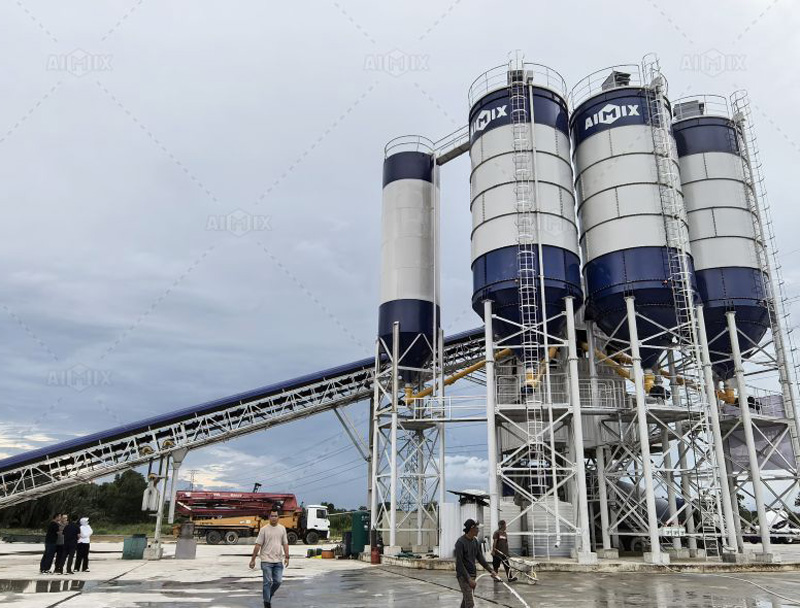
The highest-value plants come with a verifiable ledger of preventative care. This isn't just about changing oil. It means logged, scheduled replacements of wear items like mixer blades and liners before they fail, regular greasing of every bearing according to the manufacturer's spec, and calibration records for every load cell and meter on a quarterly basis. This documented proactivity is a powerful signal to a buyer. It shows the plant was treated as a precision instrument, not a brute-force tool. It translates to lower immediate risk and a longer, more predictable service life ahead. Conversely, a plant with a history of reactive, "run-to-failure" maintenance will have a hidden cost. Its price might be lower, but the buyer is inheriting deferred liabilities—bearings running on borrowed time, hydraulic systems contaminated with metal shavings from a past failure, and electrical components stressed by unbalanced loads. The discount is an advance on the major repair just over the horizon.
Img/AJ180 for a National Highway Construction in Malaysia.jpgMaintenance history directly shapes the remaining useful life of capital components. The mixer shaft and gearbox, the aggregate batcher gates, and the cement screw conveyor are high-cost items. A plant where these have been run to the point of audible wear or vibration will require a costly teardown and rebuild much sooner than one that's been kept in alignment and properly lubricated. An astute buyer or appraiser will inspect these components not just for function now, but for signs of cumulative fatigue. The price of concrete batching plant must account for the impending capital investment to restore these systems to reliable spec, which can easily erase any upfront savings from a lower purchase price.
Technology and regulations don't stand still. A plant built even five years ago might lack features that are now standard or required. The cost of bridging that gap falls on someone, and that negotiation is a core driver of price variation.
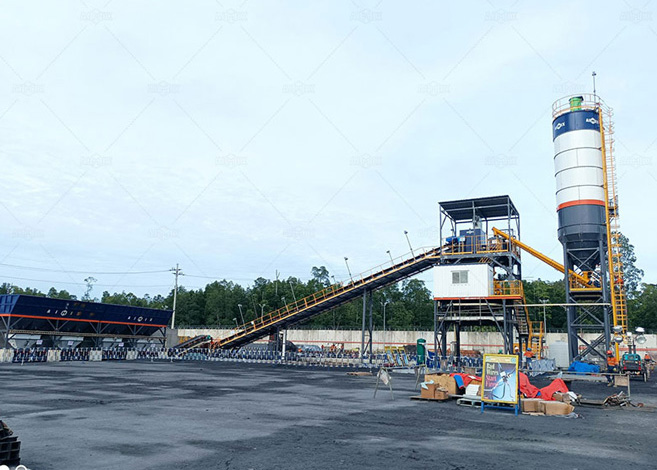
This is often the most non-negotiable and expensive area. Dust emission standards have tightened significantly in many regions. A plant without a modern, high-efficiency baghouse filter or integrated misting system may need a $20,000-$50,000 retrofit to operate legally in a new location. Similarly, water recycling regulations may mandate a closed-loop system that an older "washout to pit" setup lacks. When selling, a plant already fitted with these compliant systems commands a substantial premium because it removes a massive, uncertain capital project from the buyer's to-do list. Its price reflects this turnkey readiness.
The control system is the plant's brain. A unit with an outdated, proprietary, or failing PLC system presents a major hidden cost. Upgrading to a modern, touch-screen system with features like automatic moisture compensation, cloud-based data logging, and seamless integration with truck dispatch software is a significant investment in both hardware and programming. An automatic batching plant already boasting a recent-generation control system is fundamentally more valuable. It offers better accuracy (reducing material waste), provides valuable production data, and is easier for a new generation of operators to use. The price difference here isn't for the screen itself; it's for the operational efficiency and competitive advantage it enables from day one.
Ultimately, the listed price is just the entry fee. The true cost is the Total Cost of Ownership (TCO) over the next five years. A well-maintained, recently upgraded plant with a higher sticker price often represents a lower TCO.
The market's "discount" on a poorly maintained plant is rarely a true bargain. It is a transfer of risk and imminent capital expenditure. The savings are illusory, quickly consumed by unplanned downtime, emergency parts shipments, and the labor for major rehabilitations. On the flip side, the "turnkey premium" for a pristine, upgraded plant is an investment in predictability. You are paying for the assurance of hitting the ground running, of meeting production targets without unexpected stoppages, and of complying with regulations without surprise fines or work stoppages. The price variation, therefore, is a market mechanism that assigns value to certainty and penalizes deferred responsibility. In this light, the higher price isn't an expense—it's an investment in a known, manageable future, while the lower price is a gamble with potentially steep hidden costs. The smartest buyers run the numbers not just on purchase price, but on the five-year forecast of maintenance and mandatory upgrades, which reveals the true value proposition behind the number on the tag.