The Saudi Arabian construction landscape is undergoing a profound metamorphosis, driven by the audacious scale of Vision 2030 projects and an uncompromising push for efficiency. For decades, the sector operated on a familiar, labor-intensive model reliant on centralized batching plants, fleets of transit mixers, and manually coordinated site operations. This traditional framework is now being decisively challenged. A new operational paradigm is crystallizing, one that prioritizes autonomy, precision, and radical logistical simplification. At the forefront of this shift is the strategic integration of two pivotal technologies: the stationary concrete pump and the self loading cement mixer. This pairing is not a mere equipment upgrade; it represents a fundamental re-engineering of the concrete placement workflow, directly addressing the unique exigencies of building in the Kingdom's vast and ambitious geography.
The propulsion toward innovative methods is born from necessity, not just ambition. While the spectacle of giga-projects captures global attention, the underlying pressures reshaping contractor methodology are granular and operational. The traditional model, with its long, vulnerable supply chains, is fracturing under new demands. Congestion in rising urban centers, the sheer distance to remote build sites in locations like NEOM or the Red Sea coast, and an intensifying focus on labor optimization and safety are rendering old practices obsolete. Furthermore, the national imperative for quality and speed—epitomized by off-site construction and precision engineering—requires a level of process control that chaotic, truck-dependent delivery struggles to guarantee. The industry is seeking a more contained, predictable, and self-reliant system.
Saudi Arabia’s terrain presents a unique juxtaposition of dense urban development and vast, empty expanses. In both contexts, traditional concrete logistics falter. In cities, traffic snarls turn reliable concrete delivery into a gamble on material viability. On the frontier of a giga-project, establishing a fixed batch plant is a capital-intensive commitment, and running a "concrete highway" of trucks over desert tracks is both inefficient and environmentally taxing. The solution emerging is a move toward on-site or near-site production and placement. This pivot grants project managers logistical sovereignty, decoupling their critical path from public road networks and external plant schedules. It is a strategy of insourcing control over the most vital building material.
Modern Saudi construction is not about volume alone; it is about architectural daring and engineering excellence. Complex formworks, high-rise cores, and intricate designs demand concrete placement with pinpoint accuracy and minimal disruption. The stationary pump, whether boom-mounted or line-pumped, provides this surgical capability. It allows for continuous, vibration-free placement in congested reinforcement, enabling the realization of sophisticated designs that were logistically nightmarish under a discontinuous truck-and-crane model. This precision is now a non-negotiable requirement for tier-one contractors.
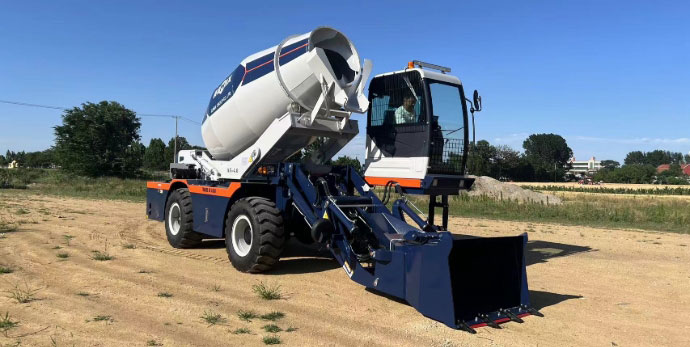
The powerful synergy between the stationary pump and the self-loading mixer creates a closed-loop, micro-optimized concrete circuit. This duo dismantles the old, multi-actor process and replaces it with a streamlined, digitally manageable operation.
The self-loading mixer is the linchpin of this new system, acting as a mobile, autonomous production node. It transcends the function of a mere mixer. It is a material handler, batcher, and mixer combined. On a controlled site, it can produce concrete on-demand, batch-by-batch, directly feeding the pump's hopper. This eliminates the need for multiple transit mixer trucks circling the site, drastically reducing site congestion, internal traffic management overhead, and associated safety hazards. Its ability to utilize locally stockpiled aggregates and cement provides a buffer against supply chain fluctuations, a critical advantage in a fast-moving market.
While the mixer controls production, the stationary concrete pump in Saudi Arabia governs placement. Fixed in an optimal location, it becomes a permanent artery for concrete flow throughout the project's lifecycle. Towering boom pumps can service vast vertical and horizontal radii from a single setup, their reach making them indispensable for high-rise and large-footprint structures like museums or university campuses. For more contained sites, robust stationary line pumps can convey material hundreds of meters, navigating through complex structures with ease. This setup ensures a consistent, tremie-free flow of material directly into the formwork, enhancing finish quality and structural integrity.
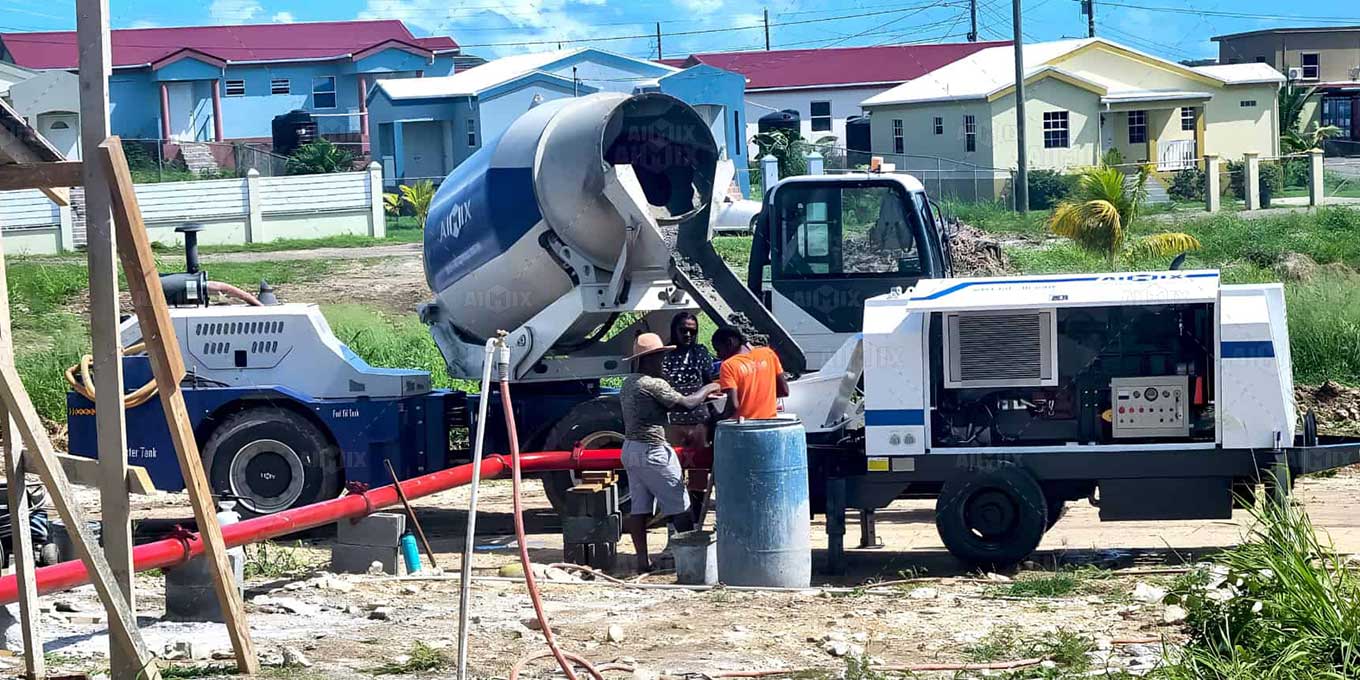
The adoption of this methodology yields a compelling return on investment that transcends simple equipment economics. It reshapes the very culture of the jobsite.
The consolidated workflow annihilates wait times. There is no longer a dependency on the arrival of the next truck. Production and placement become a synchronized, continuous operation, accelerating project timelines dramatically. Financially, it converts variable costs—fuel for truck fleets, third-party delivery charges, idle labor—into more predictable, contained capital costs. It minimizes material waste from returned loads and slump loss, contributing to both economic and environmental efficiency. The reduction in heavy vehicle movement on-site also profoundly enhances worker safety and reduces the project's carbon footprint within the site boundary.
Ultimately, this technological shift is aligning Saudi Arabia's construction execution with its visionary aspirations. The combination of self loading mixer in Saudi Arabia and stationary pumps provides the control, quality, and speed required to build the future on schedule. It represents a maturation of the sector, moving from a brute-force approach to a smarter, more sophisticated one. This is not the replacement of tradition for its own sake, but its evolution into a system capable of delivering the iconic, complex, and sustainable built environment that Vision 2030 demands. The Kingdom is not just building new structures; it is methodically building a new, more innovative construction paradigm.