For too long, the narrative of urban development has been monopolized by visions of gargantuan projects supplied by distant, monolithic batching plants. This paradigm is not just outdated; it's actively inefficient and stifling to the true, organic growth of our cities. To argue that large-scale, centralized production is the only path forward is to ignore the most dynamic and vital force in the construction ecosystem: the local small concrete plant. These facilities are not mere "mini" versions of their larger counterparts; they represent a fundamentally different, more responsive, and profoundly impactful model. They are the unsung catalysts of urban transformation, proving that immense impact is not a function of sheer size, but of strategic positioning, operational agility, and deep community integration. Dismissing their role is to misunderstand the very fabric of how modern, resilient cities are built.
The primary and most compelling argument for the local small plant is its radical proximity to the point of use. While a mega-plant on the city's outskirts battles traffic, clocking up carbon miles and grappling with the unpredictable tyranny of transit time, the local plant operates within a hyper-efficient radius. This geographical intimacy is a game-changer. For urban infill projects, boutique developments, and critical infrastructure repairs, the ability to receive a fresh, precisely-timed load within minutes, not hours, is invaluable.
It allows for just-in-time pours in constrained sites where staging areas are non-existent. It eliminates the dreaded "concrete setting in the drum" scenario during gridlock. This logistical sovereignty translates directly into superior quality control—concrete is placed at its optimal workability—and unprecedented scheduling flexibility for contractors. The small plant isn't hindered by distance; it leverages adjacency as its core competitive weapon, turning the compact urban landscape from a challenge into its exclusive domain.
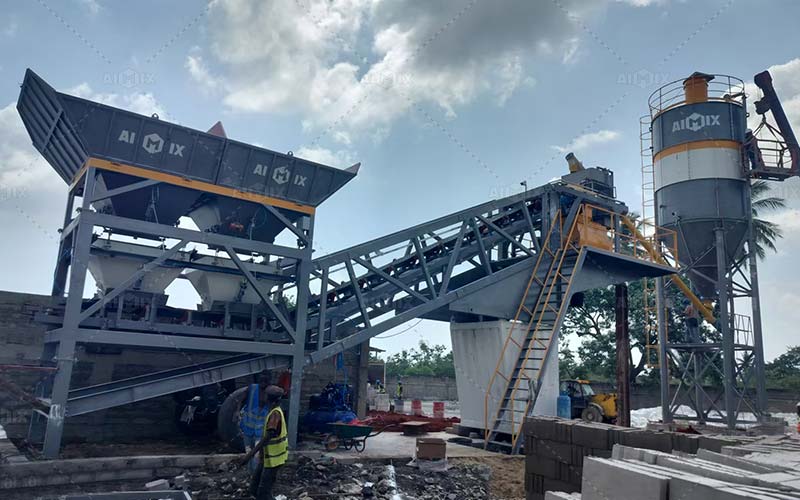
Urban development is not a one-mix-fits-all endeavor. It's a complex puzzle requiring specialized solutions: high-strength mixes for a foundation retrofit between existing structures, low-permeability concrete for a subterranean parking gallery, or non-shrink grout for delicate historical restoration. This is where the large-scale producer, optimized for volume and standardization, stumbles.
The local small plant, however, thrives as a mix design specialist. Its scale allows for economic production of small, customized batches that would be logistically absurd for a distant mega-plant. The plant manager often works directly with the contractor's engineer, iterating on formulations to meet specific structural, aesthetic, or environmental requirements. This collaborative agility fosters innovation at the street level. They become partners in problem-solving, providing the material intelligence needed to navigate the unique geotechnical and spatial challenges of the built environment. This bespoke service model is not a luxury; it is the essential ingredient for the complex, surgical construction that defines 21st-century urban evolution.
To view a local concrete plant solely as a material supplier is to grossly underestimate its socioeconomic multiplier effect. It is a vibrant node in the hyper-local economy. It creates skilled jobs—plant operators, drivers, maintenance technicians—that are rooted in the community, not subject to the distant decisions of a corporate headquarters. Its procurement policies often favor nearby businesses for parts, fuel, and services, recirculating capital within the community.
Furthermore, these plants are often locally owned, meaning profits are reinvested in the very neighborhoods they help build. This creates a virtuous economic cycle where development begets community wealth, not extracts it. They sponsor local little leagues, contribute to neighborhood initiatives, and build relationships that transcend transactional business. This embeddedness fosters a form of civic responsibility and partnership that a faceless, remote corporation can never replicate. The mobile batching plant's success becomes intrinsically linked to the neighborhood's success, aligning interests in a powerful, sustainable way.
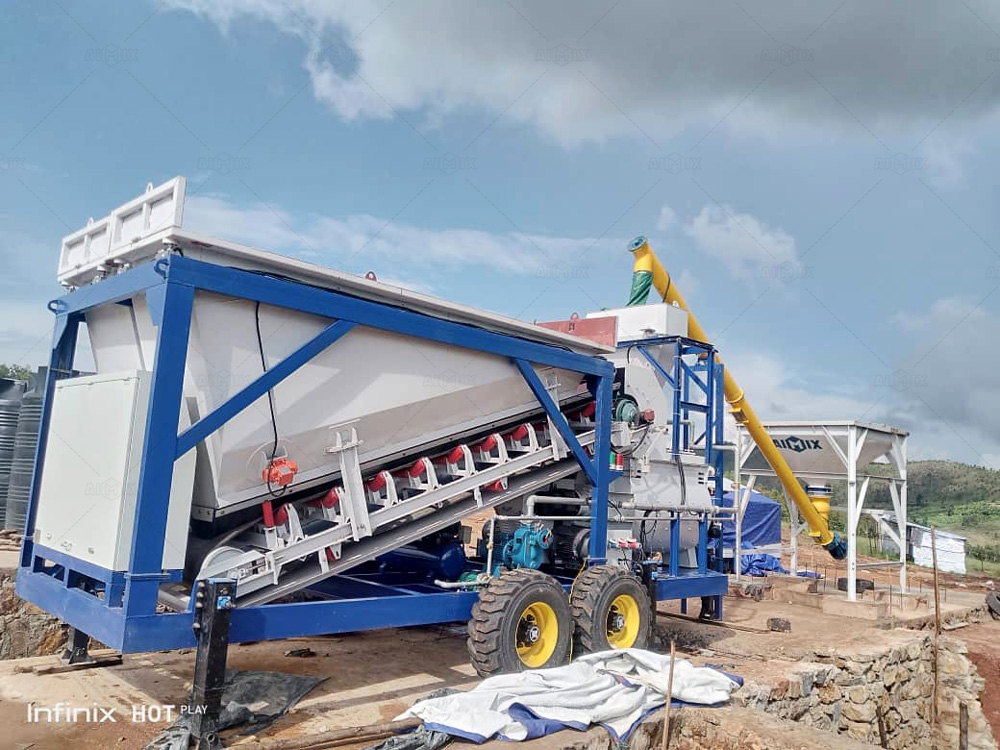
In an era of climate consciousness, the environmental argument for localized production is unassailable. The carbon footprint of concrete is notoriously front-loaded in its production and transportation. A local small plant drastically slashes the most gratuitous portion of that footprint: the haulage miles. By serving a condensed radius, it achieves a radical reduction in diesel emissions, traffic congestion, and associated particulate pollution.
But the benefits extend beyond the tailpipe. These concrete plants for sale are often pioneers in the use of recycled materials. Their size and flexibility make them ideal for incorporating recycled concrete aggregate (RCA) from nearby demolition projects or utilizing supplementary cementitious materials (SCMs) from local industries. They can act as community recycling hubs for concrete waste, closing the material loop at a neighborhood scale. This localized circular economy model—where urban waste becomes tomorrow's foundation—is a blueprint for genuine sustainability. It demonstrates that environmental stewardship isn't solely about massive technological overhauls at centralized facilities, but about intelligent, efficient, and responsive material flows.
Finally, local small plants serve as the essential testing ground for practical innovation. They are the crucible where new ideas meet the hard reality of daily production. Whether it's trialing a new admixture for faster setting in cold weather, experimenting with pervious concrete mixes for a local park project, or integrating rudimentary solar power to offset energy use, these plants operate with a hands-on, iterative approach to improvement.
Their close connection to the end-users—the contractors and project managers—provides immediate feedback, allowing for rapid refinement of new techniques and mixes. This bottom-up innovation is vital; it de-risks new technologies and materials at a manageable scale before they are adopted more widely. They are the agile research and development wing of the concrete industry, proving concepts in real time on real city streets. Their contribution to the industry's progress, though often unheralded, is immense. They ensure that urban development is not just built with concrete, but built with constantly evolving, better, and smarter concrete.
Conclusion: The future of dynamic, resilient, and livable urban development depends on a diverse, multi-scalar ecosystem. To relegate the local small concrete plant to the margins is to choose inertia over agility, anonymity over community, and waste over efficiency. They are the indispensable partners in building cities that are not just larger, but smarter, more connected, and more sustainable from the ground up. Their impact is anything but small.