The Nigerian construction landscape presents a distinct set of logistical and operational challenges that can constrain productivity and inflate project costs. A fragmented approach to concrete supply—relying on disparate equipment for batching, transport, and placement—introduces multiple points of failure, from traffic delays affecting ready-mix deliveries to labor shortages for manual handling. To achieve true operational supremacy and financial efficiency, forward-thinking contractors must evolve beyond viewing equipment in isolation. The strategic integration of self concrete mixer technology with concrete pumping systems represents a paradigm shift. This methodology consolidates the entire value chain, from raw material procurement to precision placement, into a single, controlled, and highly mobile workflow. This analysis will delineate the technical and economic imperatives for this integration, demonstrating how it directly addresses the core constraints of the Nigerian market to unlock unprecedented levels of site autonomy and project throughput.
Nigeria's urban congestion and variable rural infrastructure render traditional ready-mix concrete supply inherently vulnerable. The integration of a self-loading mixer with a pump system creates a closed-loop, on-demand production and placement unit that eliminates external dependencies.
Conventional supply chains are hostage to third-party logistics. A delayed mixer truck cascades into idle labor, postponed subsequent trades, and potential penalty clauses. An integrated self-loader/pump unit operates with supply chain sovereignty. Concrete is produced at the point of consumption, batched precisely when the formwork and crew are ready. This negates the perishability clock of transit-mixed concrete and insulates the project critical path from the unpredictability of public road networks. The system transforms concrete from a delivered commodity into a manufactured-on-demand product, placing absolute control of timing and sequence back into the hands of the site manager.
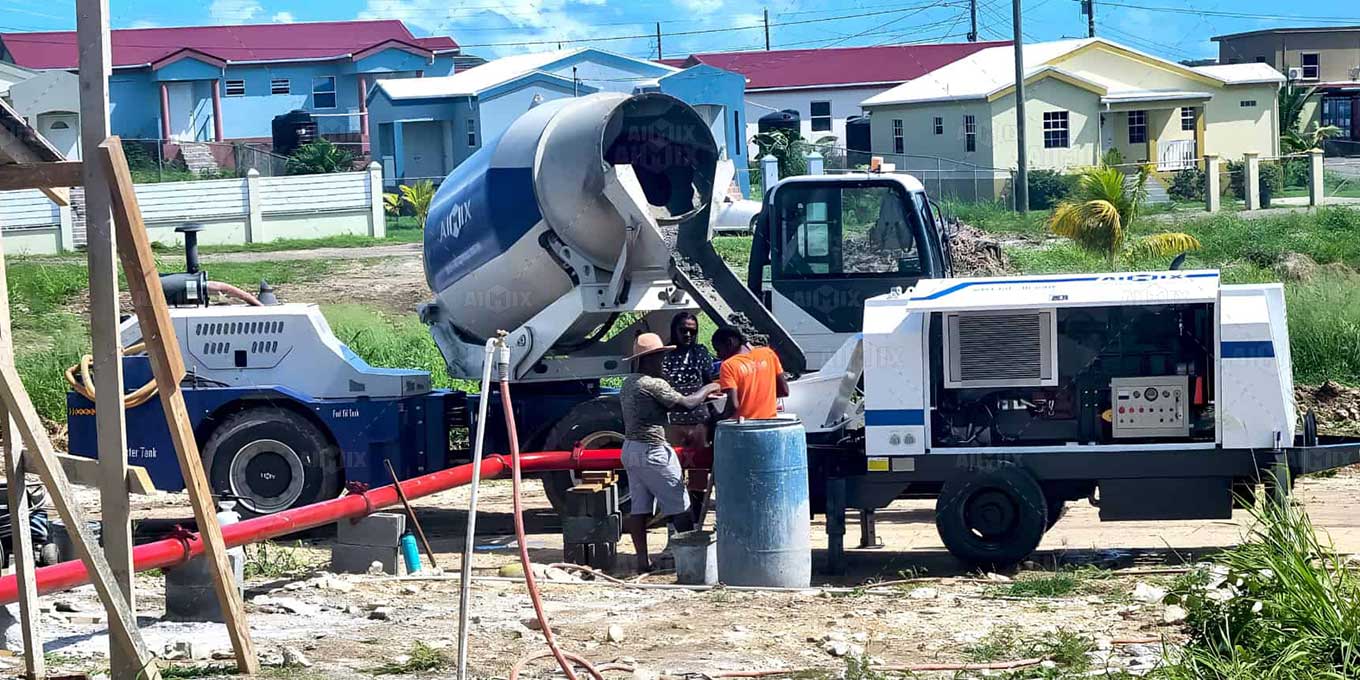
A significant volume of construction occurs in locations with severely restricted access: dense urban neighborhoods, sites behind existing structures, or remote developments with poor road quality. Standard truck-mounted concrete pumps often cannot position effectively in these environments. The integrated solution decouples placement from vehicle access. The self loading concrete mixer in Nigeria and concrete pump combination can be stationed in any viable location—a nearby street, a vacant adjacent lot—where it sources materials and pumps concrete over significant distances, both horizontally and vertically, to the precise point of need. This capability turns previously "un-serviceable" sites into viable projects, exponentially expanding a contractor's marketable service area.
The functional integration of these machines is not merely sequential; it is synergistic, creating a whole that is greater than the sum of its parts. The technical specifications must be carefully matched to yield a seamless, high-output system.
The output capacity of the self-loading mixer must be calibrated to the theoretical pumping capacity of the concrete pump for sale in Nigeria. An imbalance creates inefficiency: a mixer output that exceeds pump capacity leads to stop-start operation, while an underpowered mixer idles the pump. Modern systems allow for synchronized control. Furthermore, the self-loader's batching system provides unparalleled control over the mix design. This is critical for pumpability. The operator can adjust slump and cohesion in real-time to suit the pumping distance and ambient conditions, ensuring a consistent, blockage-free flow. This level of in-process mix tailoring is impossible with pre-mixed delivered concrete, guaranteeing optimal performance for both placement and final strength.
The consolidated system redefines the labor equation. It replaces the multiple crews typically required for material handling, mixing, transport (even if just by wheelbarrow), and placement with a streamlined two-person operation: one technician managing the self-loader and batching, another controlling the pump placement. This consolidation drastically reduces manual handling, a primary source of injury and variable output quality. It also minimizes the potential for errors in water addition or mixing time that are common in manual site mixing, ensuring every batch meets structural specification from production through placement.
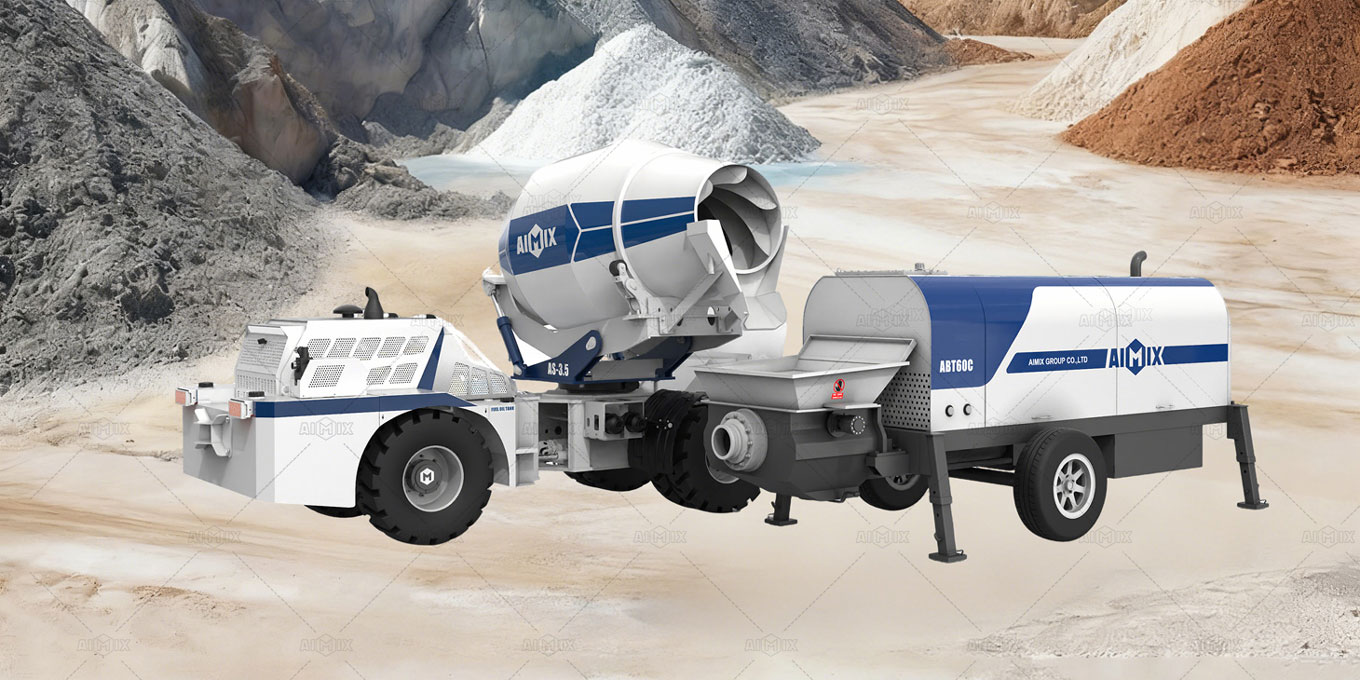
The financial implications of this integrated model extend beyond simple cost savings to a fundamental recalibration of project economics and business scalability.
The model directly displaces several major cost centers: the premium price of ready-mix concrete (which includes transport and profit margins), the separate rental cost of a standalone concrete pump, and a significant portion of unskilled labor wages. The cost structure shifts decisively from variable to fixed. Once the capital or rental cost of the integrated system is accounted for, the marginal cost of producing and placing each additional cubic meter of concrete becomes remarkably low and predictable. This allows for more accurate bidding and protects profit margins from the volatility of material and fuel price fluctuations that impact traditional suppliers.
Armed with this capability, a contractor can strategically pursue a different class of project. They can confidently bid on fast-track projects where schedule reliability is paramount, on complex projects with access or design challenges, and on projects in locations underserved by traditional ready-mix suppliers. This capability becomes a powerful differentiator, elevating a contracting firm from a commodity service provider to a technical solutions partner. It builds a reputation for reliability and innovation, creating a sustainable competitive moat in a crowded market. In essence, integrating the self-loader and concrete pump does not just optimize the concrete supply chain; it transforms it into a core strategic asset for business growth and market leadership in Nigeria's dynamic construction sector.