The prevailing paradigm in concrete supply is one of monolithic consistency, championing the large-scale batch plant that feeds an endless convoy of transit mixers. This small concrete batching plant model operates on a principle of volume and standardization, a system that is brutally efficient for sprawling urban developments but is fundamentally, critically misaligned with a vp'lanast spectrum of modern construction needs. It propagates a fallacy: that concrete is a commodity to be delivered, not a material to be engineered in situ. To embrace this limited view is to accept constraints on design, geography, and economic viability. The counter-argument, one that is both pragmatic and transformative, rests on the strategic deployment of small concrete batch plants. This technology is not a lesser alternative to large-scale production; it is a superior tool for diversification, precision, and operational liberation.
Standard 25- or 30-MPa mixes are the blunt instruments of the concrete world, wholly inadequate for projects where concrete is not merely structural but expressive. Consider architectural façades, polished interior floors, or durable landscape elements. These applications demand a bespoke materiality—specific cementitious blends, integral colors, carefully graded aggregates for exposed finishes, or low-shrinkage formulations for seamless pours. The vagaries of long-distance transport in a standard mixer truck are the enemy of this specificity; moisture loss, segregation, and time-dependent setting behaviors degrade exacting mix designs. A small batch plant, operated at the project's edge, functions as a dedicated laboratory. It allows for meticulous, small-volume production where every variable—from admixture dosage to water-cement ratio—is under direct and immediate control. This capability transforms concrete from a generic substrate into a crafted building element, enabling architects and builders to achieve reproducible, high-fidelity results that centralized supply cannot guarantee.
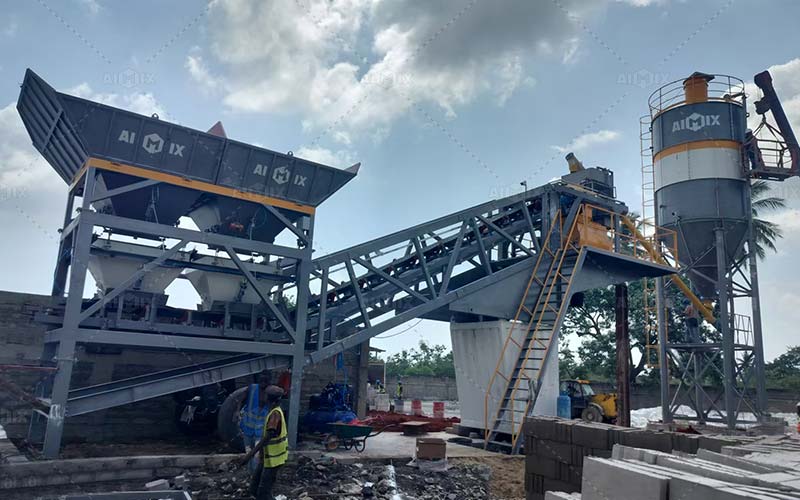
A significant portion of necessary construction occurs far from the industrial corridors serviced by large ready mix concrete plants. Rural infrastructure projects, remote resort development, mining camp installations, and community builds in underserved regions are consistently hamstrung by a simple equation: the cost and complexity of transporting concrete over vast distances often eclipses the material cost itself. The logistical tail wags the project dog. Small batch plants dismantle this geographic tyranny. By mobilizing production to the site, they eliminate the exorbitant "concrete mileage" surcharge and the severe risk of material rejection due to setting during transit. A small plant becomes a self-sufficient node of production, capable of being established on unimproved land with minimal footprint. This liberation is not merely convenient; it is economically enabling, making projects viable in locations where traditional concrete supply chains fail, thereby catalyzing development in precisely the areas that need it most.
The construction landscape is not solely composed of megaprojects. It is a vibrant, fragmented ecosystem of small-to-medium undertakings: boutique commercial renovations, custom residential estates, heritage restoration work, and serialized but geographically dispersed infrastructure repairs. The large wet mix concrete plant model is economically incoherent for this sector, as the high fixed costs of mobilization and the minimum volume requirements render small pours unprofitable. The small batch plant, however, thrives in this niche economy. Its value proposition is built on scalability and just-in-time production. It allows a contractor or specialized supplier to service a discontinuous series of projects without the crippling overhead of a fixed facility. This model aligns cost perfectly with output, enabling profitability on smaller, customized pours. It empowers businesses to build a portfolio not on volume alone, but on agility, responsiveness, and the ability to deliver precisely what a project requires, exactly where and when it is needed. In doing so, it captures a market segment that the industrial concrete complex has systematically overlooked.
The insistence on a centralized, standardized concrete supply is an increasingly antiquated stance. It ignores the nuanced demands of contemporary design, the practical realities of distributed construction, and the economic potential of a diversified project portfolio. Small batch plants present a compelling rebuttal. They are the engines of a more intelligent, responsive, and precise approach to concrete production. They argue convincingly that the future of construction belongs not to monolithic supply, but to distributed, adaptable, and client-centric solutions. By adopting this model, builders and developers do not simply purchase concrete; they invest in capability, flexibility, and the unequivocal right to dictate the terms of their own material supply.